
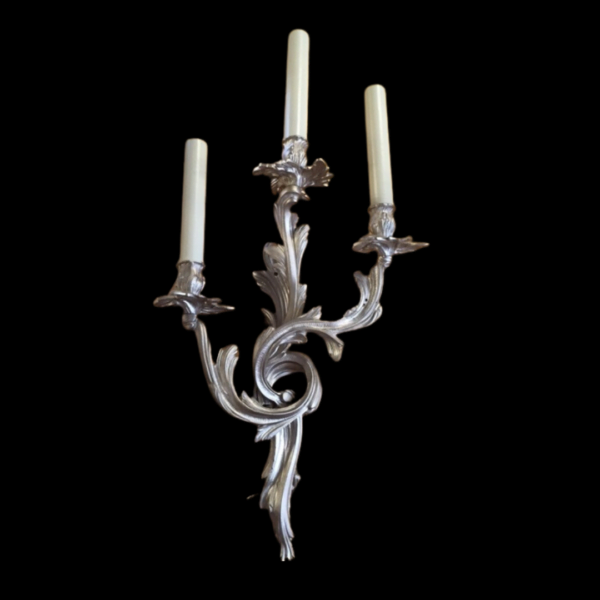
A single 3 branch reproduction wall light in a satin nickel finish.
Measurements are without candles.
44cm Height 28cm Diameter 14cm Depth
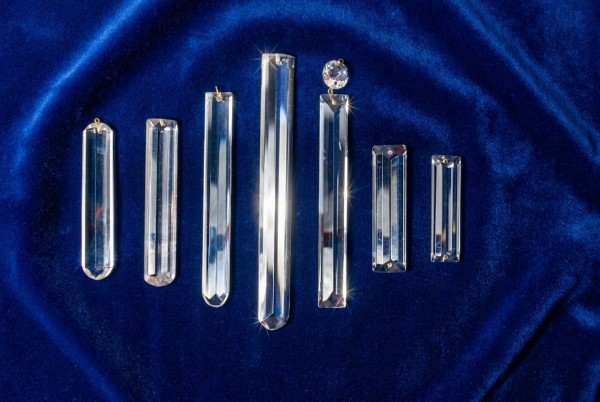
Long Rule Drop also referred to as a Prism Bar, Straight Cut Bar, French Slap Drop, or Ribbon Strips.
Originating in late 19th-century European lighting and reaching peak popularity during the Art Deco and Modernist movements of the 1930s through the 1950s, elongated rule drops were crafted to accentuate clean vertical lines and height in lighting design. Unlike shorter rectangular rule drops, these extended crystal bars feature straight parallel facets running their entire length, ending either in flat geometric edges or smooth curved bullnose bottoms.
They were often suspended in dramatic multi-tiered curtains or arranged in linear bands around grand ballrooms, theatre light fixtures, flush-mount waterfall chandeliers, and modernist wall sconces to cast long, uninterrupted beams of reflected light.
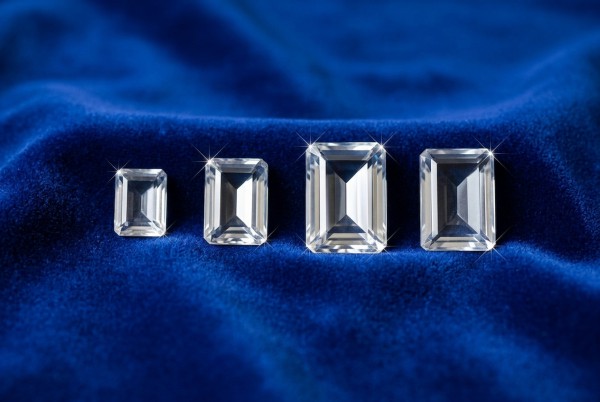
Rectangular Rule Drop also known as an Emerald Cut Prism, Oblong Octagon, or Rectangle Chandelier Drops.
Popularized during the Art Deco movement of the 1920s and 1930s, as well as the mid-century modern era, rectangular “rule” drops reflect a shift toward clean geometric lines and architectural symmetry in lighting design. Modelled after the classic gemstone emerald cut, these prisms feature stepped bevels along their edges and a large flat centre table facet that creates crisp visual depth.
Unlike traditional curved or floral drops, their straight edges and parallel cuts create long, unbroken reflections of light. They were commonly used in cascading rows on stepped chandeliers, flush-mount ceiling fixtures, geometric wall sconces, and modernist light installations.
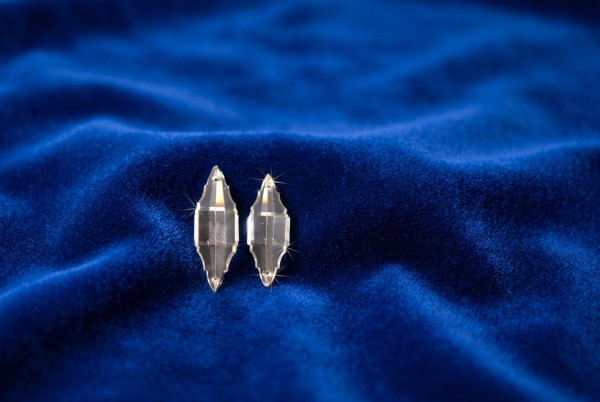
Shaped Coffin Drop also known as a Stepped Coffin Prism, Notched Diamond Pendeloque, or Bevelled Double-Point Drop.
Originating during the late 18th century and widely utilized throughout the 19th-century Regency and Victorian eras, coffin drops earned their traditional trade name from their elongated hexagonal, casket-like silhouette.
This specific “shaped” variant features stepped notches and sculpted shoulders along the outer edges, tapering symmetrically at both top and bottom. A central raised bevel ridge runs down the middle to enhance light diffraction.
Because they feature mounting holes at both ends, these drops were rarely hung in isolation; instead, they were chained together to form cascading crystal strands, garland swags, and perimeter curtains on grand French, English, and Austro-Hungarian chandeliers.
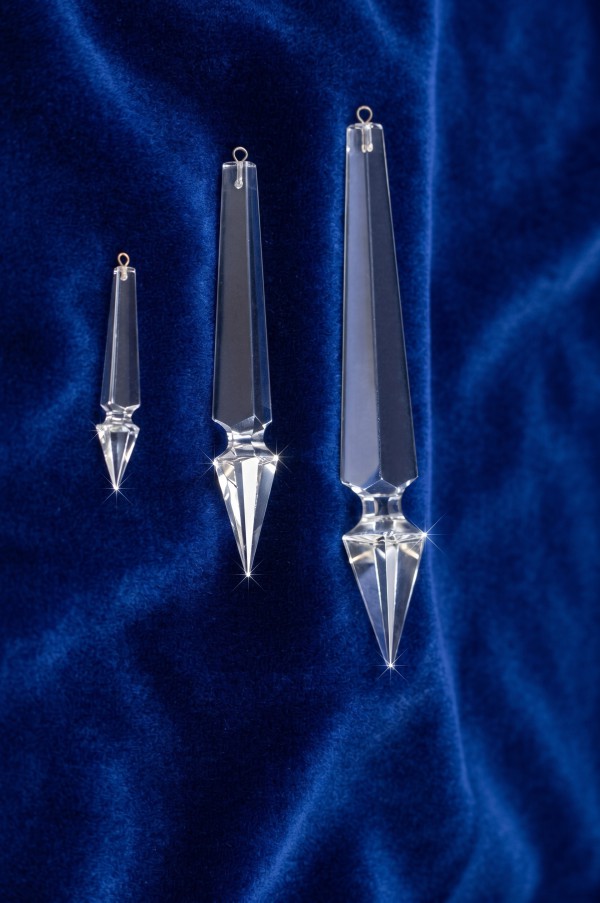
Named in honor of Prince Albert during the Victorian era, this style became widely popular in 19th-century lighting design. Featuring a distinct long tapered body capped by a faceted arrowhead top, it was designed to maximize light refraction on grand crystal chandeliers, wall sconces, and candleabra of the period.
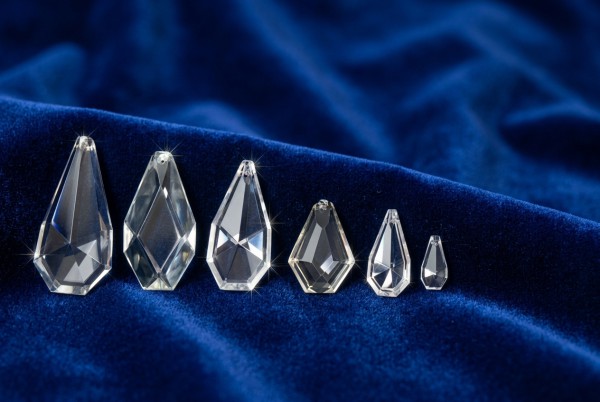
Square Cut Pear Drop also known as a Flat-Base Pear Drop, Square-Bottom Pendeloque, Octagonal Pear Drop, or Cut-Corner Teardrop.
Developing in late 19th-century English and Bohemian glass-cutting houses, the square cut pear drop represents an architectural variation on the traditional teardrop silhouette. Characterized by its wide, flattened base and clipped corners, this drop features heavy, geometric facets that form a solid octagonal outline at the bottom while tapering to a refined point at the top. The sharp, flat bottom edge and broad central facets were designed to create structural symmetry and catch low-angle light, projecting strong, defined beams of reflection.
These drops were frequently used to edge the lower rims of Victorian, Neo-Grec, and Edwardian chandeliers, gasolier rings, and ornate mantel lusters.
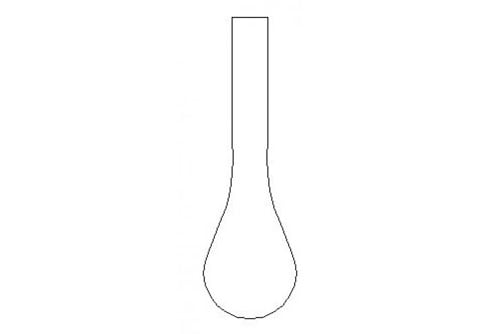
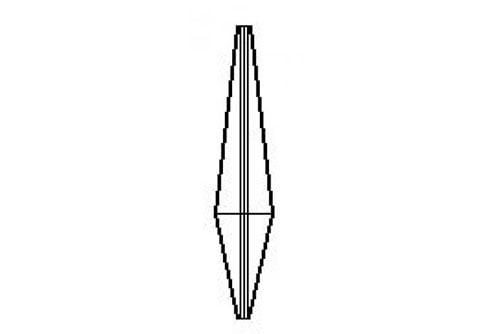
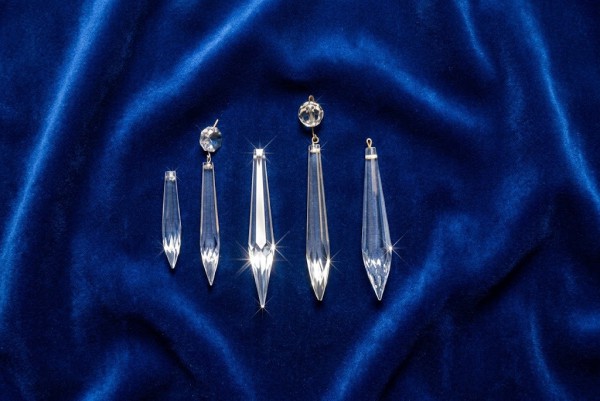
Popularized during the Victorian and Edwardian eras, icicle drops were designed to mimic natural winter icicles. Their elongated, faceted shape pulls light downward to produce a dramatic cascading effect, making them a fixture on traditional chandelier borders, hurricane lamps, and sconces.
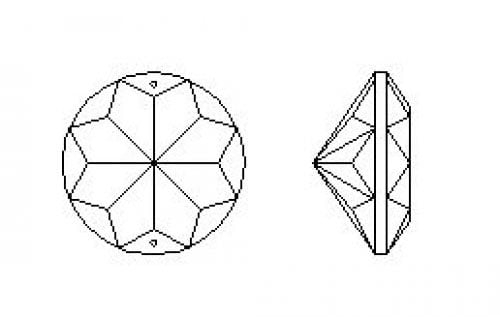
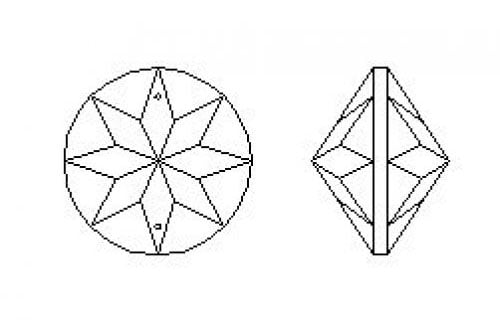
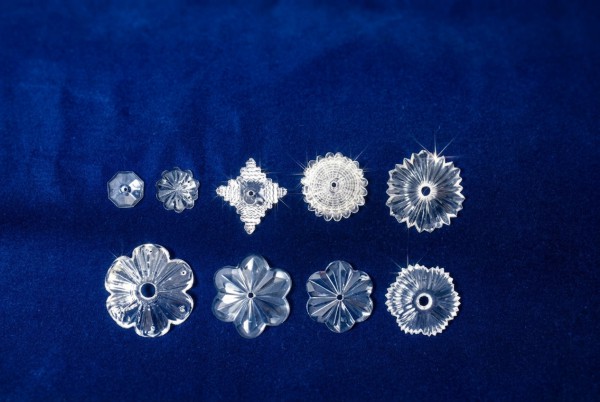
Cut Glass Rosette also known as a Faceted Flower Medallion, Starburst Rosette, or Cut Glass Junction Plates.
Unlike molded or smooth pressed rosettes, cut glass rosettes represent high-end lapidary craftsmanship that flourished in 18th- and 19th-century European glass centres like Bohemia, France, and England. Craftsmen used wheel-cutting tools to cut deep flutes, scalloped starburst edges, intricate diamond cross-hatching, and geometric star motifs directly into the glass surfaces. Designed with central pinning or rod holes, these cut medallions served a dual purpose: they covered structural metal hardware (such as arm joints, scroll connections, or central columns) while turning functional connection points into brilliant focal points that shattered light into vibrant prismatic displays.
They are hallmark components of fine Georgian, Regency, Baccarat-style, and Victorian chandeliers and wall sconces.