
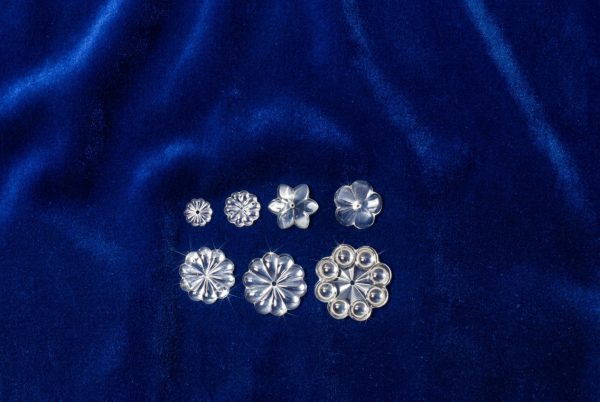
Chandelier Rosette also known as a Glass Flower Accent, Star Rosette, or Pinwheel Ornaments.
Popularized during the 18th and 19th centuries in Venetian, French, and Bohemian glassmaking, rosettes serve as decorative junction covers across classic lighting fixtures. Designed with central pinning holes, they were traditionally mounted directly over metal connecting pins, screw heads, or junction joints on chandelier arms, glass stems, and wall sconces to conceal hardware while adding floral brilliance. Ranging from simple 5-petal blossoms and multi-ribbed sunbursts to detailed thumbprint/bubble designs, these glass ornaments soft-focus and scatter candlelight, making them essential finishing accents on Georgian, Victorian, and Art Deco crystal lighting.
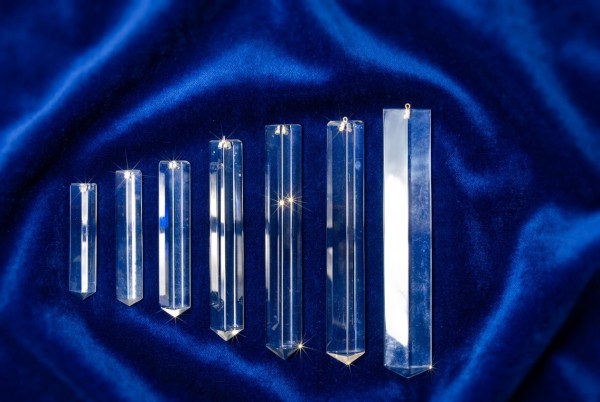
Colonial Prism also known as a 3-Point Spear, Pointed Cut Bar Prism, or Arrowhead Prisms.
Emerging in 19th-century American and European lighting design, colonial prisms became one of the most recognizable and enduring styles for traditional chandeliers, mantel lusters, and wall sconces. Defined by a long, flat back and a heavy, central triangular ridge (spine) that tapers into a pointed triangular apex at the bottom, these prisms were designed to maximize directional refraction.
Their thick, solid cut structure reflects bold, sharp lines of light. They are traditionally suspended beneath candle cups, or bobeches, and along the outer rings of classic American Colonial, Victorian, and Revival-style fixtures.
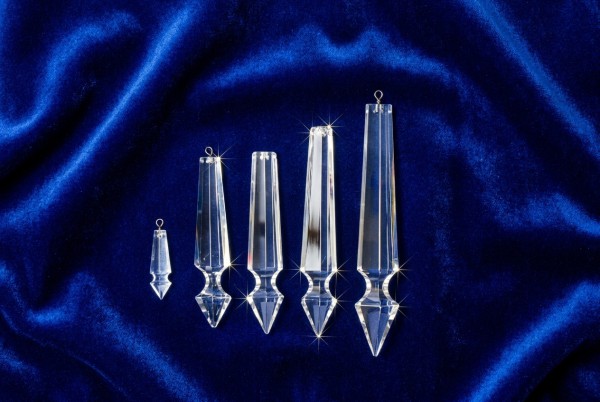
Albert Tapered Spear also known as a Notched Spear Prism, Arrowhead Spear, or Prince Albert Cut Prisms.
Named in honour of Prince Albert of Saxe-Coburg and Gotha (consort to Queen Victoria), this distinctive prism design emerged during the mid-to-late 19th century as a hallmark of Victorian crystal craftsmanship. Characterized by a long, flat back and a straight-tapered spine running down the body, the prism narrows into a defined, notched neck before expanding into a sharp, faceted arrowhead point at the tip. The complex neck cut was engineered to break up the vertical line of light and introduce a secondary refraction point, casting double-sparkle highlights. Albert spears were widely used along the main perimeter arms and upper crowns of grand Victorian chandeliers, candelabras, and mantel lusters.
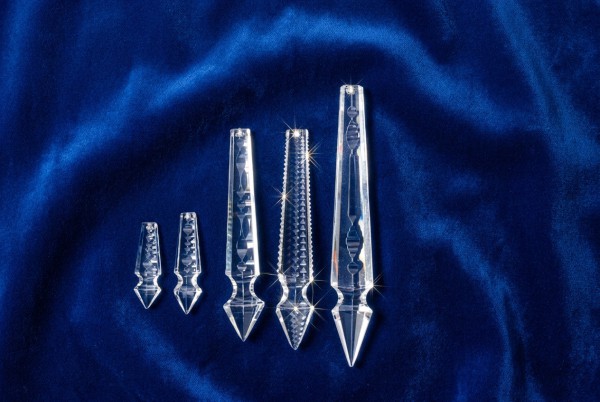
Cut Decorated Albert Spear also known as an Engraved Spear Prism, Notch-Cut Albert Spear, or Intaglio Tapered Prisms.
Representing the pinnacle of Victorian and Edwardian lapidary art in late 19th-century glass centres like Bohemia and Birmingham, these ornate variations elevate the classic Albert spear silhouette. Beyond the characteristic notched neck and arrowhead tip, glass artisans applied specialized cold-working techniques—such as wheel engraving, olive cuts, diamond serrations, and intaglio patterns—directly along the flat face or central ridge.
These intricate cuts trap and break light into micro-reflections before it hits the main facets, producing a delicate, glittering effect. They were featured on bespoke luxury chandeliers, grand palatial candelabras, and high-end mantel lusters.
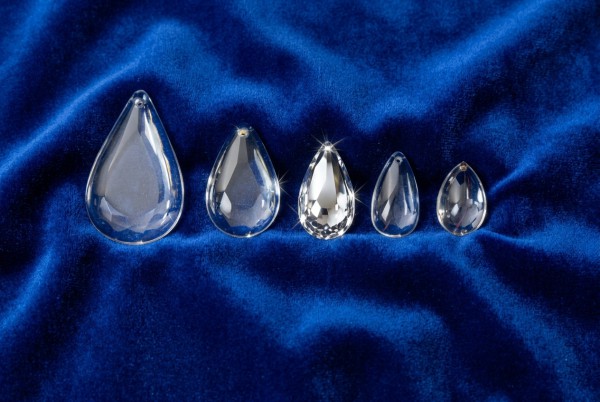
Smooth Pear Drop also known as an Uncut Pear Drop, Smooth Teardrop, or Plain Pendeloques.
Originating in 17th- and 18th-century Europe, smooth or uncut pear drops reflect the early traditions of hand-blown and press-moulded glassmaking prior to the widespread popularity of heavy facet-cutting.
Unlike cut prisms that fragment light into sharp rainbow points, smooth teardrops act as continuous convex lenses—magnifying and softly diffusing ambient candlelight across their seamless curved surfaces.
This elegant, minimalist silhouette was widely featured on French Baroque, Venetian, and Maria Theresa-style chandeliers, as well as classic wall sconces and candelabras where a softer, fluid aesthetic was desired.
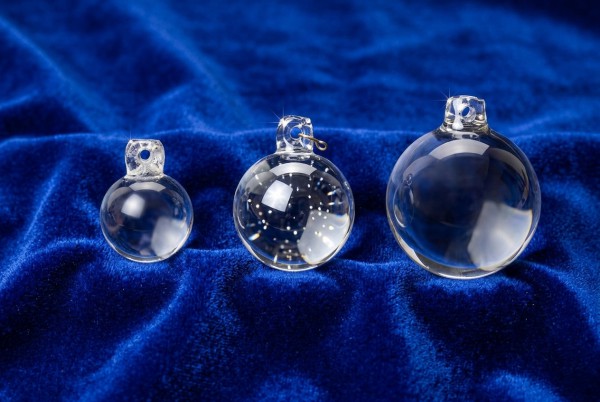
Smooth Chandelier Finial Balls, Boules, Globe Drops or Bottom Ball).
Originating during the 17th and 18th centuries in French, English, and Italian glassmaking, smooth blown- or cast-glass spheres served both a decorative and functional purpose on grand chandeliers. Positioned at the lowest point (the finial post) or suspended from the central stem, the ball acts as a grounding visual anchor and counterweight for the fixture. Unlike multi-faceted cut crystals that scatter sharp points of light, smooth glass globes act as continuous lenses—distorting, magnifying, and softly echoing ambient candle or bulb light across their curved surfaces.
They remain a iconic staple of Georgian, Regency, and French Empire lighting, often featuring an integrated glass hanging loop or top collar pin hole for suspension.
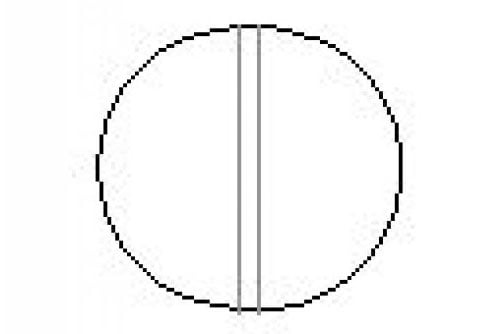
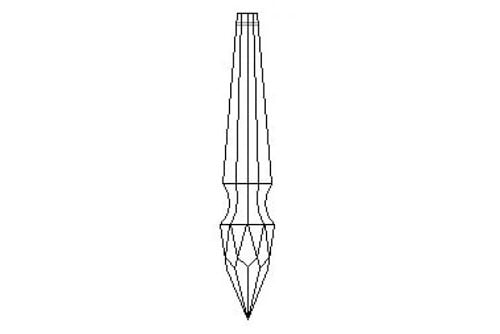
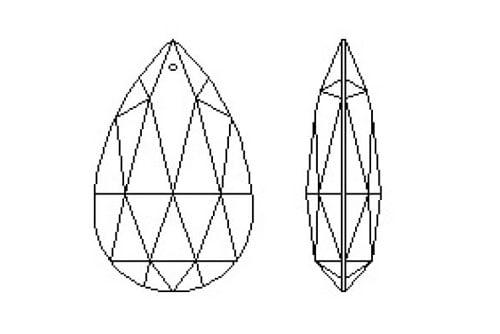
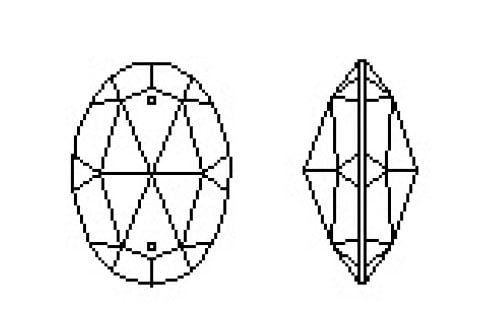
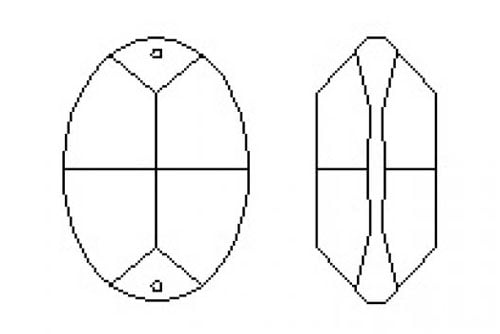
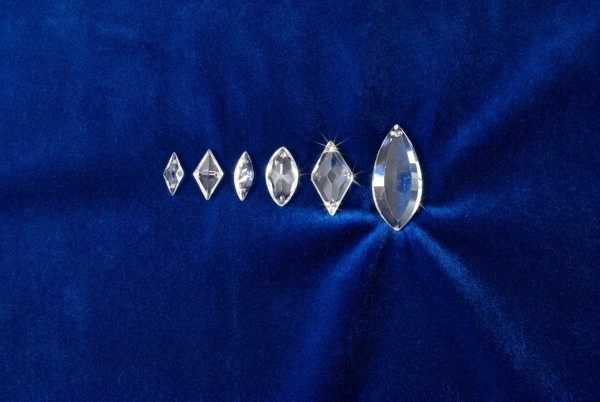
Diamond Chandelier Drop also known as a Navette Prism, Marquise Drop, or Lozenge Faceted Drops.
Originating in 18th-century Europe, this double-pointed, boat-shaped silhouette is historically derived from the French navette cut (“little boat”) and the famous Marquise cut popularized during the reign of King Louis XV. The sharp upper and lower tapered points, combined with a diamond-faceted pattern, were intentionally designed to capture light from nearby candles or lamps and draw the eye vertically along the drop’s axis. Widely used throughout the Georgian, Victorian, and Art Deco eras, these drops are staple accents on classic French Empire chandeliers, wall sconces, and table candelabras—often strung together in cascading chains or suspended as feature drops.